
The Danger of Girls’ Schools

image: A Xin for Unsplash
I grew up long after the end of World War Two, but for all of that, even in the 1970s, the war—or, as we lived it in France, the Occupation—was not all that old. My sister and I played on overgrown German bunkers; it was commonplace to see people at the market, in the streets, with numbers still tattooed on their arms. Grudges still were held; everyone in the city knew which families had been collaborators, even all those years later.
I mention "school," though, for a reason. My school was run by a community of Franciscan sisters, with the convent and the classrooms and the residences for the girls all willy-nilly inside a high wall. (I know how high; I went over it many a night, trying to be a badass. Never really managed.)
And near the school and convent was the railway station.
When America finally entered the war in Europe, it came with guns blazing. That was appreciated. But in one night raid, when the bombers were meant to take out the railway station—thus crippling German efforts to move artillery, troops, supplies—they missed. They hit the convent and the school. A lot of women and girls died.
It was counted at the time as a small price to pay for the Occupation to end, elderly Mère Marie Christine told me decades later, when the damaged parts of the school had been repaired and rebuilt. "We were called upon to make the sacrifice," she said.
I think of that now as—again—American weapons missed their mark and instead—again—destroyed a girls' school; the parallel is too obvious. But the differences couldn't be more stark. The United States was not the aggressor when the convent was damaged, but it certainly was this time around, when it accidentally bombed a girls' school in Teheran, unprovoked, for no reason other than to show dominance.
The same reason that Hitler had ordered the Occupation of France.
image: Getty Images for Unsplash
There’s something unique about this parallel, this bombing of girls’ schools. It’s symbolic, of course, of all the “collateral damage” inflicted upon non-combatants in any armed conflict. It’s a reminder that no matter the outcome, the price paid is high, and it’s not paid by the people who started the conflict.
And stepping back from the issue of war, I can’t stop thinking that it’s often women who pay the price for men’s aggression. When we find ourselves walking streets at night vigilant, always aware of the shadows around us, always ready to run. When we blame ourselves for violent parters’ actions, thinking that somehow we could have handled things better, not angered him, gotten out of the way.
In my poem Taliban Girl, I write,
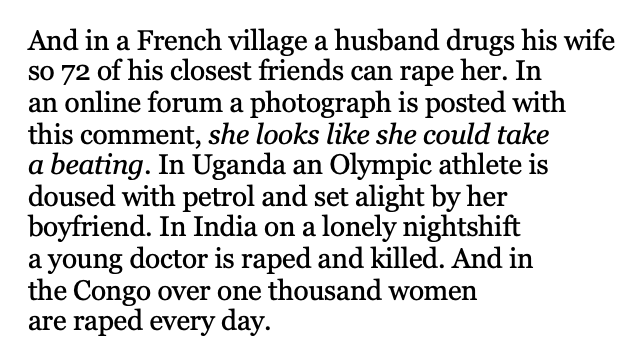
The danger of girls’ schools is that they remind us of things we’d rather forget. That we need safe spaces. That we are learning, growing, developing inside of high walls that are never high enough to keep violence out. That we are all “called upon to make the sacrifice.”
And that, at the end of the day, we are all Taliban girls.
image: Mohamed Abukar for Unsplash