
Spring Cleaning for Writers
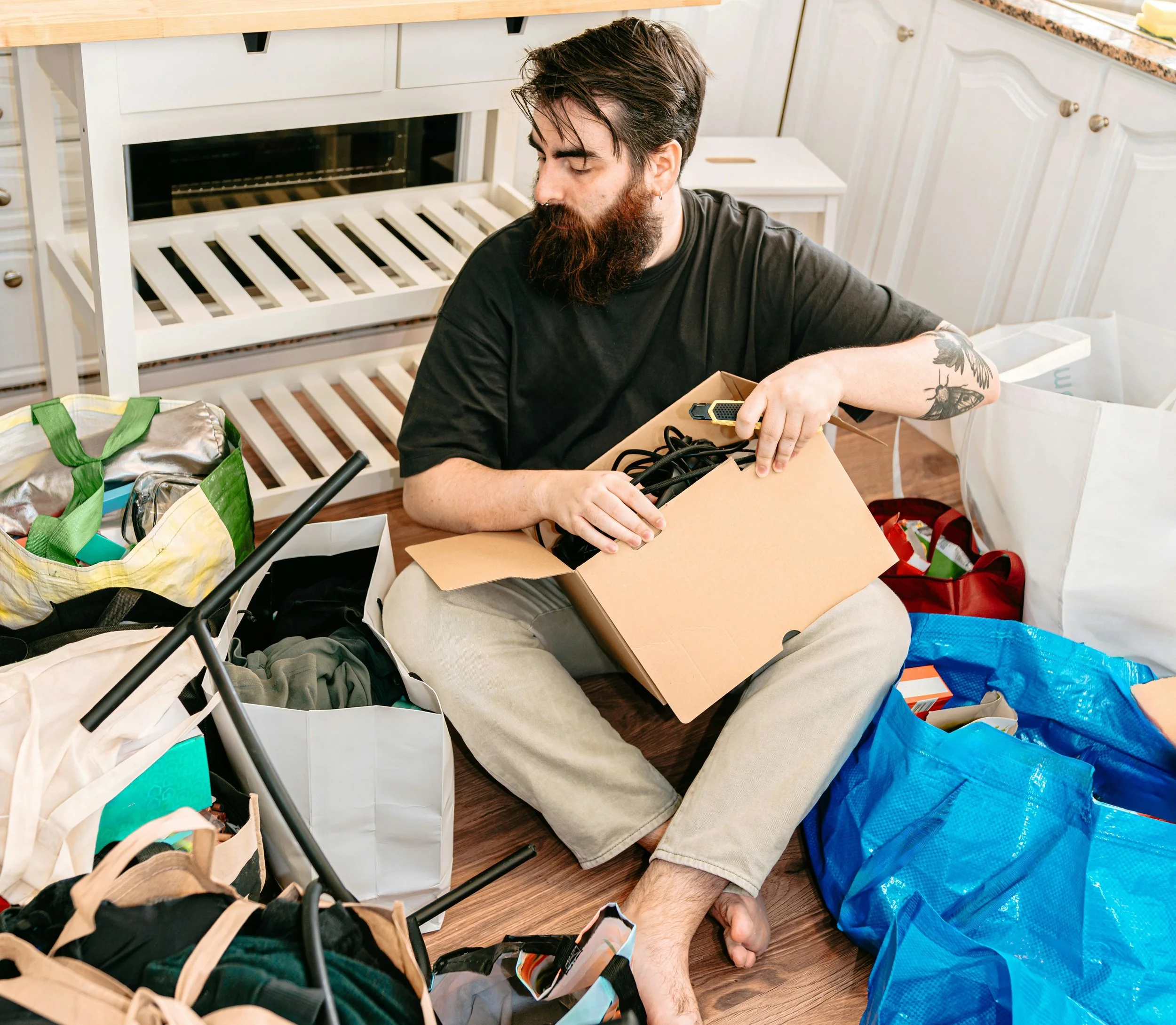
image: A-C for Unsplash
I've been decluttering my physical life for a while now. My decorating preference has always been maximalist, but as I age I realize that maximalism can exist in different ways: in the impression one gives via pieces on the wall, in the overlapping of colors and patterns, etc., but not necessarily in the amount of stuff you can cram into a space. And, honestly, why keep all that stuff?
That's part of what I realized today as I was preparing another bag to go to the thrift shop: I need to examine my reasoning behind keeping certain things. I finally accepted that I'm no longer going to be giving the lavish dinner-parties I once threw, so I've parted with nearly all my glassware. But so much of the decision lies within relationships: what of someone comes for tea, I'll need to keep that milk-jug. What if three people come for coffee, I need that many cups.
Of course, it goes far beyond "who's coming for dinner?" Much of what I've accumulated over the years has a story of some sort attached to it. The clock I inherited from my mother. The coffee table my friend Margo made for me. The myriad framed black and white photographs from when I lived in Paris. The painting that reminds me of the place where I live now.
I love living with these things, partly because they are beautiful (and I am mindful of William Morris' admonition to have nothing in my home that isn't either beautiful or useful), partly because the people and experiences behind them make me smile. But I have no illusions about their being meaningful to anybody but me, and when I die, I'm sure they'll end up in an estate sale or a thrift shop. I hope they'll be pleasurable for someone else to own; but the stories? The stories die with me.
And that's been a helpful perspective as I do this very thorough spring cleaning. Not every story needs to be told to every person. And that brings us back to storycrafting.
Whenever I work with writers, I always ask: who is your audience? To whom are you telling this story? And many of them have the same response, a response along the lines of, "I don't care, I'm just writing what I want to write, somebody will read it and recognize the beauty/meaning/characters." It seems to them, somehow, that identifying an "audience" will somehow cheapen their work. Or else they assume that, because they like it, everyone else will, too.
image: Andrej Lisakov for Unsplash
But writing for an audience is more than a marketing ploy. It means you believe what you have to say is important, and you want to get it to the people who need it/would appreciate it the most. Think about it in terms of your daily interactions. You wouldn't give your mother the same description of your hot date as you might your best friend. You might not describe your work project in as much detail when speaking to a neighbor as you do with your boss. Sharing relevant opinions, newly acquired knowledge, or even feelings shows that you respect the other person, that you're not going to clutter up your conversations with needless details or information the other person would find uninteresting.
That works in our writing, too. One of the things thinking of an audience does is to free us from that clutter. We all do an enormous amount of research before we write—that goes for fiction as well as nonfiction. And sometimes (in fact, if we're thorough, I'd venture to say always) we end up with more research than will fit into our stories. There's a terrible temptation to shoehorn it in somehow, to keep the clutter—after all, it was hard-won!
While researching Trafficking in Murder, my most recent novel, I spent over a year researching the Wampanoag tribe that lives primarily here in Massachusetts. I interviewed people, I read, I traveled, I became a nagging presence on chat boards. And I found this really cool thing (always watch out for "really cool things"!): there's a creature in some Wampanoag stories called the Pukwudgi, a goblin who sometimes is assaultive. I loved the concept. I loved the name, even, saying it over and over out loud. And I wanted a Pukwudgi in my book. I tried very hard to find a way to put a Pukwudgi in, and he kept irritatingly jumping out again. He just didn't fit.
If I were writing for myself, I'd have kept my little goblin. But I'm not. I'm writing for people who have come to expect a story that's well-told, well-crafted, entertaining and meaningful. So I took a brush and dustpan and cleared the clutter (which is, essentially, the act of editing, when you think about it). He may return in a future story; he may not. I left him behind with regret... but I left him behind.
It's springtime. A great time to air out your thoughts as well as your homes.
Clearing the clutter helps us understand what is and isn't important, whether it's objects in our homes or components of our stories. The things we remove might end up in the virtual equivalent of a thrift shop and take on a different meaning for the person acquiring them than they held for us.
I'm learning that that's okay.
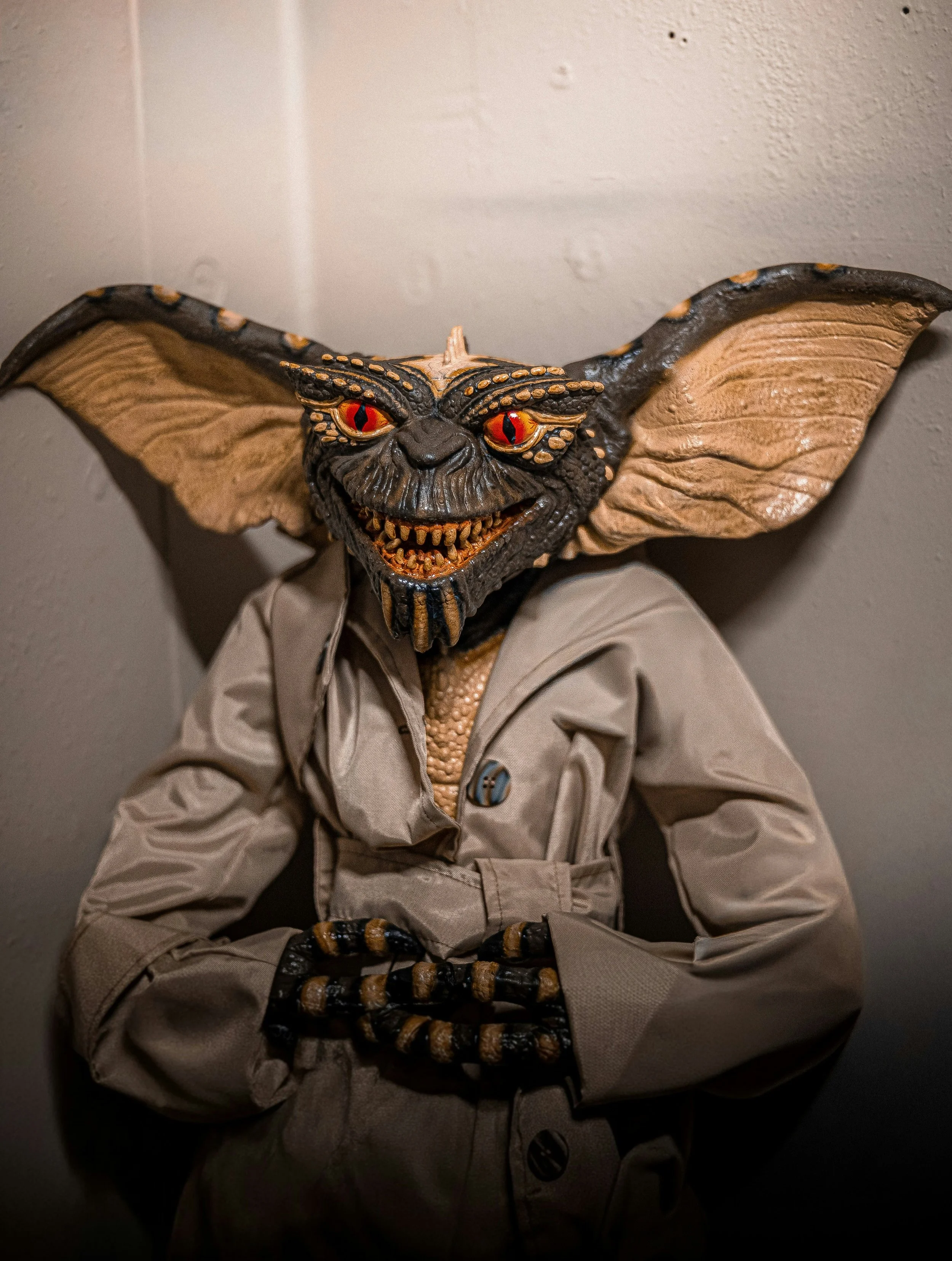
image: Vikram Singh for Unsplash