
Who Will Write Tomorrow's Great Literature?
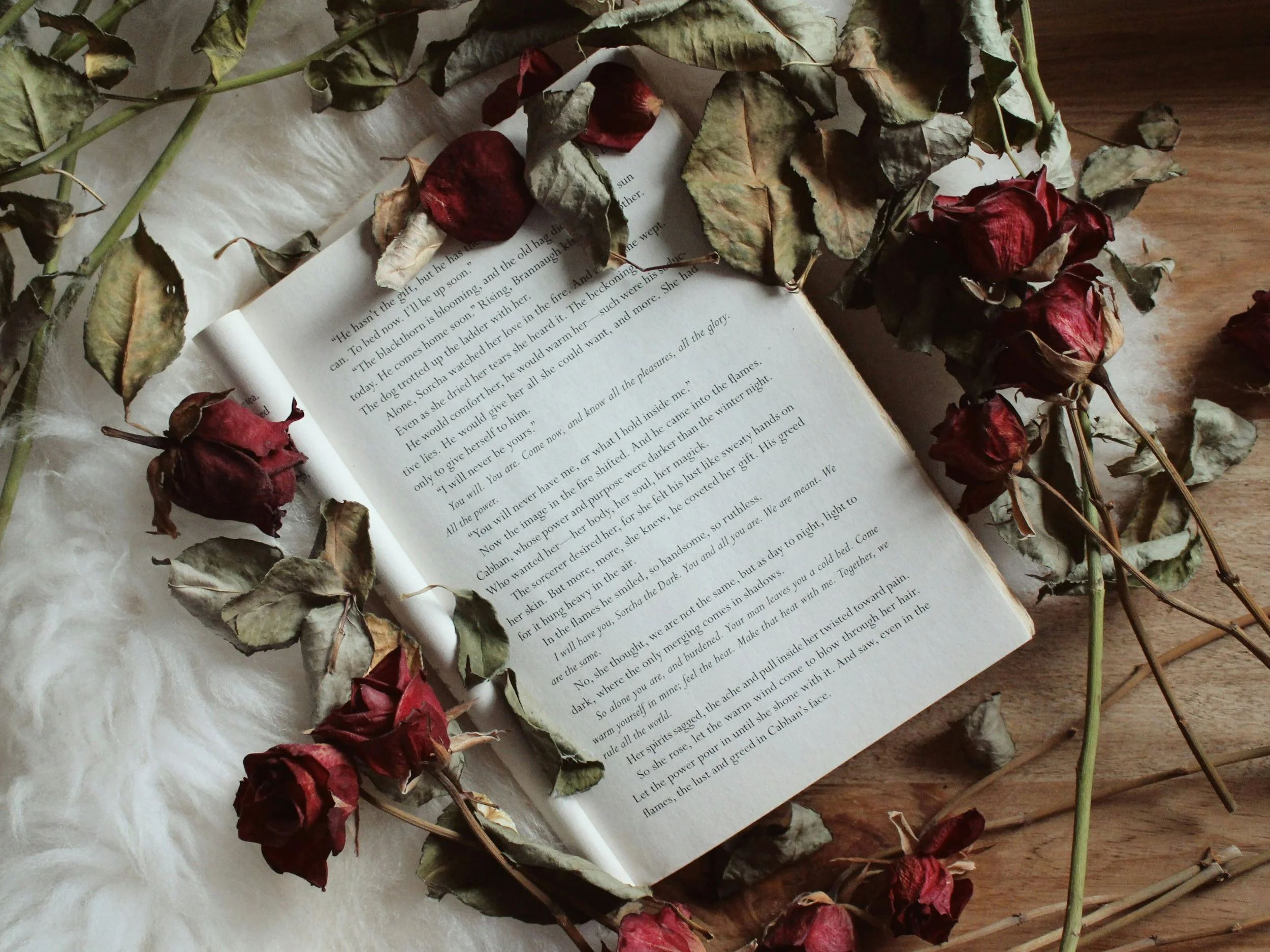
Elaine Howlin / Unsplash
I'll start with a caveat: what follows is a tremendous generalization. I know that. I know there's hope, and that creativity, like life, will out.
But in the meantime, I have some concerns.
In the United States, we've been hearing for some years that students aren't doing as well academically as we probably thought they were, that many teenagers are graduating high school with a level of reading that's par for the eighth grade—and that was before the current administration's apparent war on education.
The advent first of social media and now of artificial intelligence have precipitated a crisis in attention span, and not just in younger people. Video has largely replaced the written word in the way many people absorb information.
I submit short fiction and poetry to a number of literary journals, and these days every single one of them requires an affirmation that the submission was not AI-aided. In some cases, a warning is issued: if a writer is found to have used AI, the writer is banned from the publication altogether. Those warnings don't come out of the blue: they're responding to something. I also hear from academics that there's a parallel process and problem in colleges and universities as well.
It's a truism that social media has served to accelerate the shortening of attention spans, and that for many young people, written material that can't fit on a smartphone isn't read. That is unfortunate, but it only speaks to how material is absorbed, not how it's produced.
Which brings us to AI. I remember the shock I felt the first time I encountered someone who said, perfectly seriously, that they were now an author, and it had only taken a day and a half to write their book. I don't know if that book sold any copies, and perhaps that's not the point: creation has become production in the minds of many. And if you grow up in that kind of culture, then perhaps you won't understand the difference between an AI-produced story and something by, say, F. Scott Fitzgerald. After all, those established literary authors take such a long time to get to the point!
What scares me is the thought of that young person, and scores of others like them, not having the wherewithal to perceive writing as a practice. Not feeling the frustration of searching for the right words to express thoughts, or offer descriptions, or create dialogue. Literature is born out of a balance of that frustration and the utter joy one feels when the work does come together. When the practice ceases to be part of the creative process, that disconnect means that deep thoughts cannot find their way into literature.
(And that is ignoring the fact that we are constantly policing what books young people may and may not read, so deep thoughts aren’t even necessarily elicited!)
Note here that I'm not saying stories will not survive the age of artificial intelligence; of course they will. Storytelling is part of every culture, every family, every individual, and has been for centuries, long before the written word emerged. Stories will always find a way to be told. The medium may change—storytellers may use video, for example—but the human need for stories will endure.
What concerns me, rather, is what my colleague Jay Critchley calls the loss of a "pipeline" for literature. Will there be a next Maya Angelou, a next Victor Hugo, a next Italo Calvino? If the concept of a writing practice disappears, how can the person who might have created something great, something enduring, something that speaks to the essence of the human experience emerge?
ChatGPT isn't going to write that literature. And I'm more than a little afraid that we'll be unable to nurture the people who might.

Getty Images / Unsplash