
Where Do We Find Meaning?

image: Greg Rakozy for Unsplash
Honestly, I don't know what scares me more at this juncture in time: the rise of right-wing authoritarian governments throughout the world, or that of artificial intelligence.
I am neither a political scientist nor a diplomat, so I'll leave the punditry about the former to people more qualified than I. But I am giving increasing thought to the latter, and in the realm of writing and thinking, I am reasonably qualified.
When I've criticized AI, I've sometimes been accused of hypocrisy, because one of the ways I pay my mortgage every month is through ghostwriting. What is the difference between a person employing a ghostwriter to create something for which they later claim creatorship, and that same person putting prompts into a chatbot and claiming creatorship over the output?
It's not an unreasonable question, and it's one which I am constantly answering, even if only in my own mind. After all, I have interest in the outcome: why, indeed, should anybody pay me to ghostwrite their book or article, when they can get a similar outcome for free? Mine is for sure one of the endeavors that will probably disappear in the next few years, if not sooner; so I definitely have skin in the game.
I say all that a priori because I have to be honest with myself when I'm thinking this through. I am no disinterested bystander (and I wonder at the end of the day if there are any disinterested bystanders in this conversation at all, but that's a topic for another time), and I do wish to keep paying that mortgage.
But at a deeper level I am coming to the conclusion that behind all of these conversations is the concept of meaning.
Because we're sentient beings—we're aware of being aware—we look to find meaning: in our lives, in our world, in our relationships. We need more than mere survival—being born, staying alive, procreating, and then dying: most of us feel a need to have our lives mean something. We each define that meaning differently and go about securing it in various ways, but we all want it. And while one of the ways we know our lives are meaningful is when they are reflected back to us (through the people around us, through the impact we understand our lives having on the world, through the way the world itself impacts us), for meaning to be understood it often is seen through activity.
A couple of years ago, a writer named Joanna Maciejewska posted this comment on social media, a comment that has since become a meme: "You know what the biggest problem with pushing all-things-AI is? Wrong direction. I want AI to do my laundry and dishes so I can do art and writing, not for AI to do my art and writing so that I can do my laundry and dishes."
In other words, we're outsourcing the activities that give meaning to our lives. Most of us look for what we might call "meaning opportunities": places where we can do good, or create something, or exercise empathy. What happens when those are the very opportunities taken over by something that is non-sentient? What takes their place in our lives?
I don't think we have an answer, because as is obvious, ethics and critical thinking will always be playing catch-up with the development of technology. In aviation, this is called "getting behind the plane," when situational awareness is slipping and reacting takes over from acting. If you're a pilot, this is a very bad place to be.
It's a very bad place to be. And I think it's where we find ourselves now.
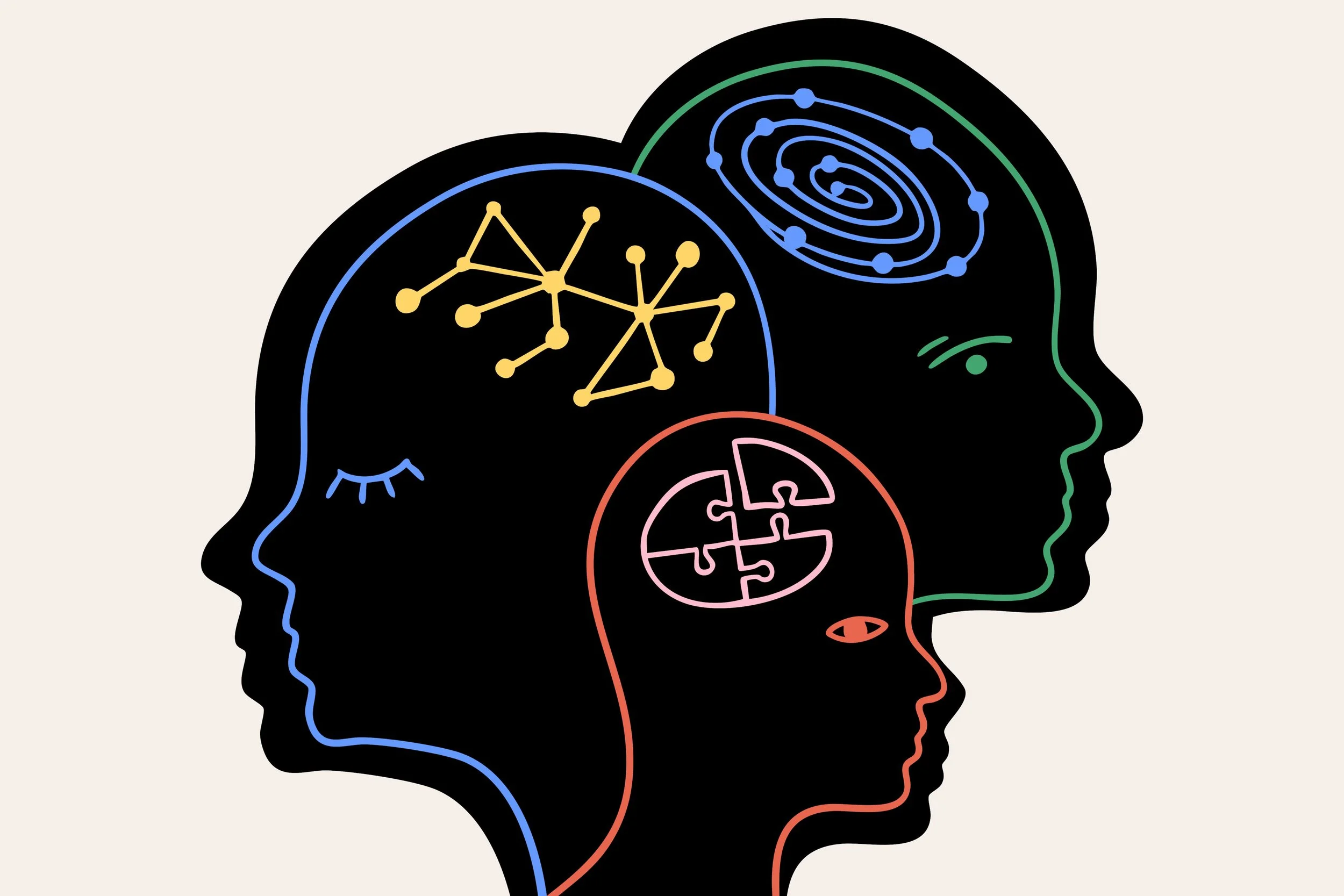
image: Alona Savchuk for Unsplash
The philosopher Sven Nyholm talks about how genuine achievement involves more than just an outcome: it comes about through hard work, insight, skill, difficulty, sometimes even sacrifice. Genuine achievement gets its meaning because of the process rather than simply the end product. The point of AI, he argues, is that "it is designed to take over tasks that are effortful for us," and yet it's actually in the effort itself that we find meaning.
When there is no longer a perceived need for the process, then critical thinking and creativity both go by the wayside. I cannot say how many wonderful things have come into my life—insights, information, opinions, and more—when I've been struggling to write something and have fallen down research rabbit holes. My curiosity—another trait we don't share with AI—has been piqued and expanded. It has taken hours, sometimes days and even weeks, for me to feel I have a grasp of what I'm doing, but that was not lost time: it changed me. I would be a different person today if I hadn't engaged fully in the process of creation. Perhaps more importantly, my sense of contribution—of meaning—would have disappeared.
Which brings me back to ghostwriting. I argue (and I hope I'm not deluding myself) that the manner in which I do this work, the process of this work, is different from an AI-generated opus. I spend hours with my client delving into their world; I look for the places in their accounts where future readers will connect and find pleasure, or hope, or knowledge, or... well, yes, meaning. I work with people who have put in the hours and the years developing a concept, or a business, or indeed a life, and I find the best possible way of expressing their thoughts and achievements to the world. I also—and perhaps less importantly—am currently producing better writing than most of the AI-generated material I've seen, though that, too, may end up changing. I have no ethical problems with what I do (and have turned down a number of projects that challenged my ethics), because I am bringing a skill it has taken me years to develop to enable my client to best present what they want to have "out there." We have been on a journey together, and I believe we have both found meaning in that journey.
Maybe. Or maybe I just like paying my mortgage. Either way, it's not a question AI would ever pose itself. I hope we can all keep questioning, thinking, looking for meaning even as we learn the limits of what technology can—and perhaps should—do.

image: Hoi An & Da Nang for Unsplash